
Yes, TSA PreCheck lines at LaGuardia Airport are generally shorter and faster than standard security screening lanes, though the magnitude of this advantage has shifted dramatically in early 2026 due to federal government funding disruptions. Under normal circumstances, TSA PreCheck passengers at LaGuardia’s Terminal A, Terminal B, and Terminal C move through security with expedited screening procedures that allow them to keep shoes, belts, and light jackets on, and to leave laptops and liquids in their bags—streamlining the entire process. However, a traveler departing Terminal B in late March 2026 reported waiting 45 minutes in a TSA PreCheck line, a stark contrast to the historical advantage PreCheck once provided.
This article examines how TSA PreCheck performance at LaGuardia compares to standard security under both normal and current disrupted conditions, what factors affect wait times, and how you can minimize delays regardless of which screening lane you use. The comparison between TSA PreCheck and standard security has become more nuanced than ever. While TSA PreCheck remains the faster option in principle, the ongoing federal shutdown and reduced staffing levels have compressed the speed differential at LaGuardia, making it essential for travelers to understand what to expect and how to prepare accordingly.
Table of Contents
- How Much Faster Are TSA PreCheck Lines at LaGuardia Compared to Standard Security?
- Terminal Location and Availability at LaGuardia Airport
- Peak Travel Times and Queue Patterns at LaGuardia
- Real-World Wait Time Data for March 2026
- How Federal Shutdowns and Staffing Impact TSA PreCheck Processing
- TSA PreCheck Membership Cost Versus Time Savings During Disruption
- Planning Your LaGuardia Security Experience Going Forward
- Conclusion
How Much Faster Are TSA PreCheck Lines at LaGuardia Compared to Standard Security?
Under normal pre-shutdown conditions, standard security screening at laguardia averaged between 9 and 20 minutes, with general screening times around 13 minutes total. tsa PreCheck, by design, processes passengers more quickly—there are fewer items to remove, less preparation required at the conveyor belt, and dedicated lanes that operate with different efficiency targets. The operational advantage is real: PreCheck passengers bypass much of the slowdown that occurs when standard-security travelers remove shoes, empty pockets, extract liquids, and power down electronics. This means the absolute difference between the two screening types typically favored PreCheck by several minutes during normal operations.
However, the current federal funding lapse has disrupted this historical advantage. As of late March 2026, standard security lanes at LaGuardia reported wait times of 15 to 45 minutes or longer during peak travel periods, suggesting that even with a general slowdown, PreCheck should still be faster in theory. Yet the single verified report of a 45-minute PreCheck wait at Terminal B indicates that PreCheck is not immune to the broader staffing and operational challenges affecting the airport. The gap between the two options has narrowed considerably, and relying on PreCheck as a guaranteed quick-pass is no longer prudent during this period.

Terminal Location and Availability at LaGuardia Airport
TSA precheck lanes operate at all three of LaGuardia’s passenger terminals—Terminal A, Terminal B, and Terminal C—giving members consistent access to expedited screening regardless of which airline or terminal their flight departs from. This widespread availability was designed to ensure that PreCheck members could reliably benefit from the program across the airport. Each terminal maintains its own security checkpoint infrastructure, and PreCheck screening is available at all of them.
However, not all terminals experience equal volumes or staffing levels, and this can affect the practical benefit you receive. A traveler facing a 45-minute wait in Terminal B’s PreCheck line would have benefited more from a flight in a less-congested terminal. Additionally, the federal shutdown has created uneven staffing patterns across the airport, with call-out rates around 20 percent on some days reducing checkpoint capacity and exacerbating bottlenecks in certain areas. If you have flexibility in flight timing or terminal assignment, choosing off-peak hours or terminals with lighter traffic can yield better results than simply relying on your PreCheck membership.
Peak Travel Times and Queue Patterns at LaGuardia
Security lines at LaGuardia are busiest during two distinct windows: 6:00 to 9:00 AM and 4:00 to 7:00 PM. These windows correspond to morning business travel and early evening leisure travel, when the airport experiences its highest passenger volume. Both TSA PreCheck and standard security lanes experience longer wait times during these periods, though the absolute numbers differ. Early morning is particularly congested because business travelers, families with children preparing for spring break trips, and commuters all converge on the airport simultaneously.
The evening rush, driven partly by flight crews and passengers returning from daytime meetings or activities, creates a second wave of pressure. If you are flexible with your travel schedule, departing outside these two windows can meaningfully reduce your wait time—sometimes by 50 percent or more compared to peak periods. A 6:30 AM departure, for example, places you squarely in the worst congestion, while a 10:00 AM or 3:00 PM departure would likely encounter significantly lighter screening volumes. This timing consideration applies to both PreCheck and standard security users, but it is especially valuable for standard-security passengers, who have less margin for delays given the longer baseline processing times. PreCheck members boarding a 7:00 AM flight might still clear security in 15 to 20 minutes under normal conditions, while standard-security passengers boarding the same flight could wait 30 to 45 minutes.
Real-World Wait Time Data for March 2026
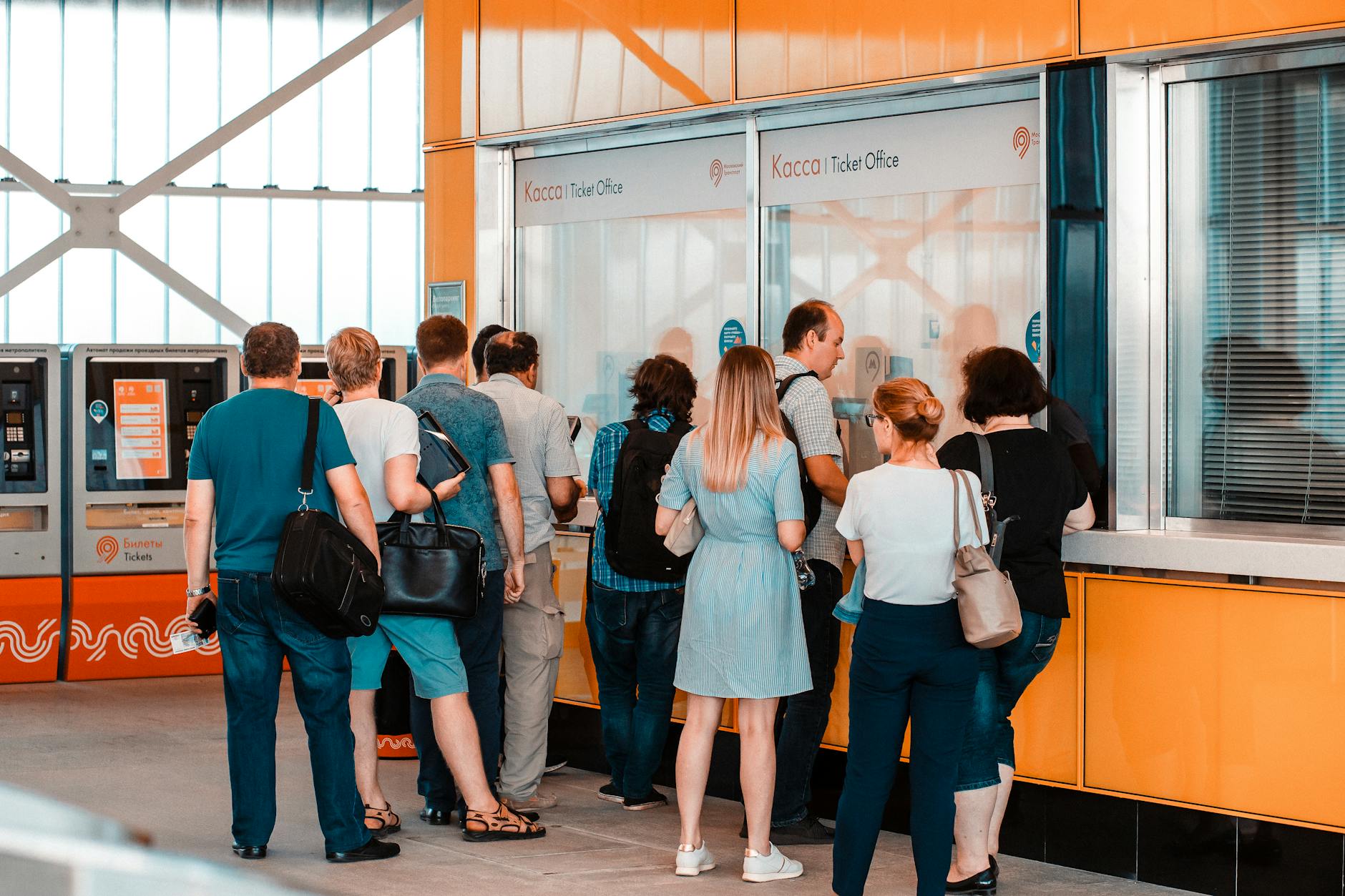
As of March 25, 2026, LaGuardia has suspended its real-time wait time display on its website, making it difficult for passengers to plan in advance. This suspension occurred during a federal government funding lapse that has directly impacted TSA staffing and operations. Standard security lane wait times have been reported at 15 to 45 minutes or longer during peak periods, and in some cases during the worst congestion, wait times have stretched to 2 to 3 hours in certain terminals. The TSA PreCheck lane report of 45 minutes at Terminal B in late March 2026 demonstrates that even premium screening is not isolated from these severe delays.
These extended wait times are not typical of historical LaGuardia operations. Prior to the shutdown, a 20-minute standard security wait during peak hours would have been considered somewhat elevated. The current environment represents a degraded operational state caused by reduced staffing, higher call-out rates, and reduced screening capacity. If you are traveling through LaGuardia during this period, it is prudent to assume worse-case-scenario timing rather than historical norms. A traveler hoping to navigate security quickly in March 2026 should not assume their PreCheck membership will deliver the speed gains it historically has provided.
How Federal Shutdowns and Staffing Impact TSA PreCheck Processing
The current federal shutdown affecting LaGuardia’s operations has reduced screening capacity through two main mechanisms: call-out rates around 20 percent on some days and the absence of administrative staff who normally manage scheduling and lane allocation. TSA officers are required to work without pay during shutdowns, and some choose not to report to duty, creating staffing shortfalls. This cascades into longer wait times across all screening types, because even dedicated PreCheck lanes cannot operate at full efficiency if there are not enough trained officers to staff them.
Additionally, when staffing is constrained, security management often consolidates screening lanes to concentrate resources where they can be most effective. This means that while PreCheck lanes may still technically be open, they may operate with fewer officers than during normal periods, effectively reducing their throughput capacity. The 45-minute PreCheck wait at Terminal B in late March 2026 likely reflects this reality—the lane existed and operated, but with reduced staffing that made it no faster than a standard lane might have been in previous years. Travelers should recognize that PreCheck’s speed advantage depends on full operational staffing, and when that staffing is compromised by broader government funding issues, the premium benefit diminishes significantly.

TSA PreCheck Membership Cost Versus Time Savings During Disruption
TSA PreCheck membership costs $85 for a five-year period, or approximately $17 per year. Under normal conditions, the time savings across multiple trips easily justify this cost for frequent travelers. However, during periods of severe disruption like the March 2026 shutdown, the value proposition weakens.
A traveler paying $85 for membership and then facing a 45-minute PreCheck wait is receiving minimal tangible benefit from their investment that day. For passengers planning to travel through LaGuardia during the current federal funding lapse, the membership remains worthwhile if you travel frequently and expect normal operations to resume, but it should not be your only strategy for minimizing security delays. Arriving early—90 minutes before domestic flights and 150 minutes before international flights—remains the most reliable approach to avoiding last-minute rush. Your PreCheck membership is an asset, but it is not a guarantee during periods of reduced airport staffing.
Planning Your LaGuardia Security Experience Going Forward
The long-term outlook for LaGuardia’s TSA PreCheck advantage depends on the resolution of the federal funding situation and the airport’s ongoing capacity expansion. Historically, PreCheck has delivered consistent speed benefits, and once federal staffing normalizes, that advantage should return. However, the March 2026 data has demonstrated that system-wide disruptions can compress the gap between PreCheck and standard security quite severely.
For now, the most prudent approach is to combine multiple strategies: hold your TSA PreCheck membership for when normal operations resume and will deliver its full benefit, but assume current LaGuardia conditions are unpredictable and arrive at the airport well in advance of your flight. Choose off-peak travel times if possible, and if you discover that a particular terminal is experiencing longer lines on your travel day, you may be able to request a gate change or adjust your route through the airport to use a less-congested checkpoint. The advantage of PreCheck still exists—it just requires patience and planning in the current environment.
Conclusion
TSA PreCheck lines at LaGuardia Airport are generally shorter than standard security screening, but this advantage has been significantly compressed by the federal government funding lapse affecting the airport as of March 2026. Under normal conditions, PreCheck passengers benefit from expedited processing that typically saves 5 to 10 minutes or more compared to standard security, and this benefit is available across all three of LaGuardia’s terminals.
However, the current environment of reduced staffing, elevated call-out rates, and constrained checkpoint capacity has created situations where even PreCheck can involve 45-minute waits, narrowing the historical speed differential considerably. To navigate LaGuardia security effectively during this disrupted period and beyond, plan to arrive 90 minutes early for domestic flights and 150 minutes for international flights, choose off-peak travel times if your schedule allows, and use your TSA PreCheck membership as part of a broader strategy rather than a sole solution. Once federal operations normalize, PreCheck’s historical speed advantage should return, making the $85 five-year membership cost a worthwhile investment for frequent travelers through the airport.